How to Choose a Solar Pane
 l Manufacturer for Wholesal
Send Your Project Details and Request a B2B Solar Quote
e and Commercial Projects
Put the quotation on screen, but leave the price column alone for a moment. Find the model number instead. Now look for it on the certificate, data sheet, packing-list draft, and warranty. A 580 W offer paired with papers for another series is not ready for comparison. Something still needs explaining.
This small check matters more than buyers sometimes expect. An attractive price has a reason behind it. Perhaps the cell changed. Perhaps the front glass is thinner, the leads are shorter, the junction box is different, or the named port was never included. Each point looks like a footnote. On a real shipment, the footnotes pile up, and the EPC team may receive modules it never approved.
That is why choosing a solar panel manufacturer is a risk decision before it becomes a price decision. Distributors need repeatable stock. EPC contractors need a module that fits the electrical and structural design. Importers need documents that survive customs and market checks. Project owners need someone to answer when a serial number fails years later. The same carton of modules sits at the center of all four concerns.
This guide is written for buyers who must make that choice and defend it internally. It explains what to ask, what evidence to keep, and where a promising quotation can still hide a costly gap. It also connects module buying with the inverter, battery, mounting, freight, and system-design decisions that shape the final project.
Begin with a requirement sheet, not a request for “best price”
A vague RFQ creates vague promises. “Please quote 580 W panels, one container” gives the sales team enough information to send a number, but not enough to build the right offer. The missing details return later as revised prices, changed labels, unavailable certificates, or a module that does not fit the project layout.
Write down the destination country first. Add the application: warehouse roof, carport, ground mount, coastal site, farm building, telecom site, or resale inventory. State the target power range, preferred construction, size limit, connector requirement, cable length, frame color, and delivery window. If the project has an approved vendor list or named certification route, say so now.
Then add the commercial facts. Say whether the order is a trial pallet, a mixed container, or the first delivery in a monthly program. Write the Incoterm together with its named place; “FOB” on its own is unfinished. Note any OEM label, branded carton, serial file, or translated manual. Finally, name the inspection party and the acceptance rule, even if the rule is only a reference to an attached plan.
The requirement sheet does not need to be beautiful. It needs to be unambiguous. A useful one-page version includes these fields:
| Buyer input | What to specify | Why the factory needs it |
|---|---|---|
| Market | Country, required standards, labels, language | Determines compliance documents and artwork |
| Application | Roof, ground, carport, coastal, desert, remote | Changes mechanical and environmental requirements |
| Module | Power band, dimensions, glass type, frame, connector | Defines the actual construction being quoted |
| Project | Quantity, string plan, inverter limits, delivery date | Links production to the electrical design and schedule |
| Quality | Tests, sampling, EL or flash-data requirements | Establishes shipment-release evidence |
| Commercial | Incoterm, port, payment, forecast, trial order | Makes prices comparable |
| OEM | Brand files, carton marks, barcode and serial rules | Prevents artwork and traceability errors |
| Warranty | Required term, response route, remedy expectations | Clarifies responsibility after delivery |
For a complete solar system design, attach the load profile, site drawings, temperature range, roof or land information, and target energy yield. The module is not selected in a vacuum. A different current rating may alter inverter inputs. A wider frame may alter rails. A heavier glass-glass panel may change structural review and lifting plans.
Identify who actually controls the product
“We are a factory” is easy to write in an email. The useful question is: which organization controls the product you will receive?
A direct manufacturer normally operates the production site and quality system named in the supporting documents. A brand owner may design and warrant the product while using a contract plant. An exporter may consolidate several items and manage shipping. A trader may source from more than one factory. Any of these models can work. Problems begin when the buyer assumes one model and the supplier operates another.
Ask for the legal company name on the quotation and invoice. Compare it with the certificate holder, warranty issuer, bank beneficiary, and factory audit. If the names differ, request a short written explanation of the relationships. This is ordinary due diligence, not an accusation.
Next, follow one decision. Who may approve a new cell supplier? Who signs off a label revision? Who receives a field complaint, and who pays for diagnostic work or replacement freight if the claim is accepted? If every answer points to an unnamed third party, the contract may offer less control than the presentation suggests.
For buyers testing a new region, an experienced exporter can be valuable. Mixed loads, smaller minimum quantities, and coordinated documentation may matter more than direct factory access. A large project has a different risk profile. It may need witnessed tests, a locked bill of materials, capacity reservation, and direct engineering discussion. In other words, fit the commercial structure to the job. The word “manufacturer” on a slide does not make that choice for you.
Read the model number across every document
Keep the quotation, data sheet, certificate, label drawing, packing list template, and warranty side by side. Highlight the model number on each page. It is surprising how often this simple exercise reveals that a sales brochure, a test certificate, and the proposed shipment are talking about related—but not identical—products.
Model-family certificates can legitimately cover several power classes or construction variants. The supplier should be able to show how the proposed model fits the family definition. “Similar model” is not an explanation. Ask for the scope page, the naming rule, and confirmation of the manufacturing location.
Do the same with the electrical block. Read Pmax, Voc, Isc, Vmp, Imp, maximum system voltage, and the series-fuse limit from the proposed sheet—not from a remembered value. Those figures end up in string calculations, cable schedules, protective-device choices, and inverter checks. One stale cell in an old PDF can travel surprisingly far through a design.
Temperature coefficients deserve their own review. Cold weather raises module voltage; hot cells reduce power. The design should use project conditions and the current product sheet, not a convenient annual-average temperature. If the supplier offers several cell formats under one wattage label, confirm which electrical set belongs to the order.
Now check the mechanical drawing. Dimensions, weight, mounting holes, approved clamp zones, frame profile, cable exit, and connector position all affect the job. Ask for a revision number and date. The selected solar mounting system supplier needs that drawing before rails and clamps are finalized.
Finally, read the warranty as a contract. Find the legal warrantor, covered models, effective date, territory, exclusions, evidence required, remedy, and claim address. A headline such as “30-year performance warranty” says little about how a claim will be processed. The procedure is part of the product.
Treat the bill of materials as a controlled promise
“580 W” describes an output class, not a recipe. Behind that label sit glass, cells, encapsulant, ribbon, backsheet, frame alloy, junction box, leads, connectors, and sealants. Several combinations may be sound. What the buyer needs is a boundary: which combinations are already approved, and what happens before anything outside that boundary reaches the line?
Ask the supplier for a controlled construction description or approved component list. It can protect confidential recipes while identifying the technical grade or approved sources that matter to performance. The document should also explain who authorizes a substitution, what validation is required, and whether the customer receives notice before production.
Avoid a blanket clause saying that “equivalent materials may be used.” Equivalent in what respect? A connector can look identical while differing in contact material, current rating, locking geometry, or field-mating approval. A backsheet can share a color while differing in layer structure and weathering evidence. The word needs a measurable definition.
There is a practical way to discuss substitutions without freezing the factory forever. Separate changes into three groups. Administrative changes, such as a harmless formatting correction, may only need record control. Prequalified alternatives can be listed in an approved matrix. Design or source changes that affect compliance, reliability, appearance, fit, or warranty need notice and buyer approval. Put the categories into the purchase agreement.
OEM buyers should extend this control to labels and packaging. Record the artwork revision, brand name, model syntax, barcode format, carton mark, pallet label, and manual. Approve a digital proof and, for the first order, a physical sample. A correct module in the wrong branded carton can still create a customs or channel problem.
Ask for production evidence that can be traced
A polished sample proves that a polished sample can be made. The harder question is whether normal production is controlled on an ordinary shift, at full pace, while several orders are moving through the line.
Begin where materials enter the building. Follow a cell lot or a roll of encapsulant from receipt to release. Check identification, quarantine status, storage conditions, and shelf-life where relevant. Then ask someone to connect that lot to finished serial numbers. Private supplier invoices can stay private; the control trail cannot be imaginary.
If travel is impossible, walk through one production order on a video call or in records. Pause at stringing, layup, lamination, trimming, framing, junction-box bonding, curing, cleaning, test, and label release. At each stop, ask to see one check and one record. Then ask the awkward part: what does the operator do when a value is outside its limit? “It never happens” is not a reaction plan.
At finished inspection, define the evidence that will accompany the order. Flash results by serial number are useful when the file format and measurement conditions are understood. Electroluminescence images can reveal cracks or interconnection problems, but the timing and acceptance criteria must be agreed. Visual inspection, insulation testing, dimensions, label checks, and packing checks complete a release plan tailored to the order.
Try a traceability challenge. Pick three finished serial numbers and ask the factory to identify their date, line, shift, key material batches, flash result, and inspection status. Then pick one material batch and ask which finished units used it. A system that works in both directions will be far more useful if a field issue appears later.
Do not expect a defect-free universe. Real factories encounter nonconforming material and process drift. What matters is containment: how affected units are separated, who decides disposition, whether rework is controlled, and how corrective action is checked. A redacted example can tell a buyer more than a wall of certificates.
Test capacity claims against the delivery week you need
An annual-capacity figure describes a factory in broad strokes. It does not reserve the buyer's week. Lines change products, maintenance interrupts shifts, materials arrive late, and older orders already occupy time. Procurement therefore needs a dated answer for this model, this artwork, and this inspection—not another large number followed by “per year.”
Ask how many lines can make the proposed construction. Add normal line speed, shift pattern, yield, planned maintenance, product changeover, current commitments, and the time needed for OEM materials. A factory can have large theoretical capacity and little available capacity in the buyer's week.
Build the schedule backward from the site or vessel cut-off. Leave time for final artwork, material confirmation, production, testing, inspection, corrective work if needed, booking, inland transport, customs documents, and port handover. “Twenty days” means little unless both sides agree on the starting event and the point of completion.
For recurring solar panels wholesale orders, share a forecast and distinguish it from a firm purchase order. Forecast visibility helps the supplier plan cells, glass, cartons, and vessel space. In return, ask the supplier to state the frozen period, change rules, and capacity-allocation method. This turns delivery from a weekly chase into a managed process.
Also define how delays will be communicated. The first notice should come when a risk appears, not after the promised ship date. A short weekly report can show material readiness, production status, inspection date, booking status, and open decisions. It is simple, but it gives both teams time to act.
Compare landed risk, not one price-per-watt cell
Put every quotation into the same comparison sheet. Use the same model scope, construction, quantity, Incoterm, named port, currency, inspection plan, warranty responsibility, and payment timing. If one offer excludes OEM cartons, third-party inspection, local transport, or bank charges, add them before ranking the price.
Do not leave container loading to the final afternoon. Put the pallet count, dimensions, gross weight, bracing, moisture protection, and unloading notes on the review list. Ask for the actual loading sketch. The largest quantity that fits on paper may be a poor choice for a rough route, a small forklift, or the buyer's warehouse door.
Think through damage and shortage before the vessel sails. Who photographs the empty container and seal? Which loading pictures will be retained? How quickly must visible or concealed damage be reported? What documents support a claim? Who arranges survey, replacement, or credit? Clear steps prevent a commercial argument while people are also trying to protect wet or broken cargo.
Payment terms carry cost and risk too. A lower nominal price with a large early deposit can tie up more working capital. A new supplier may reasonably require security; the buyer may reasonably stage exposure around evidence. Sample orders, inspections, document review, and balanced milestones help both sides build confidence.
This exercise is not a hunt for fees with which to embarrass a vendor. It simply puts complete offers beside one another. The purchasing discussion can then be honest: perhaps one bid buys a stronger pack, another secures a firmer production week, and a third wins on landed cost.
Make sure the module fits the rest of the system
Panel approval and inverter approval meet in the string calculation. Start at the coldest design condition: does string Voc stay below the DC ceiling? Move to normal operation and check the MPPT window. Then look at current on each input, including the inverter's short-circuit limit. For these checks, a solar inverter supplier needs to provide the current model manual and grid papers, not a brochure for the wider family.
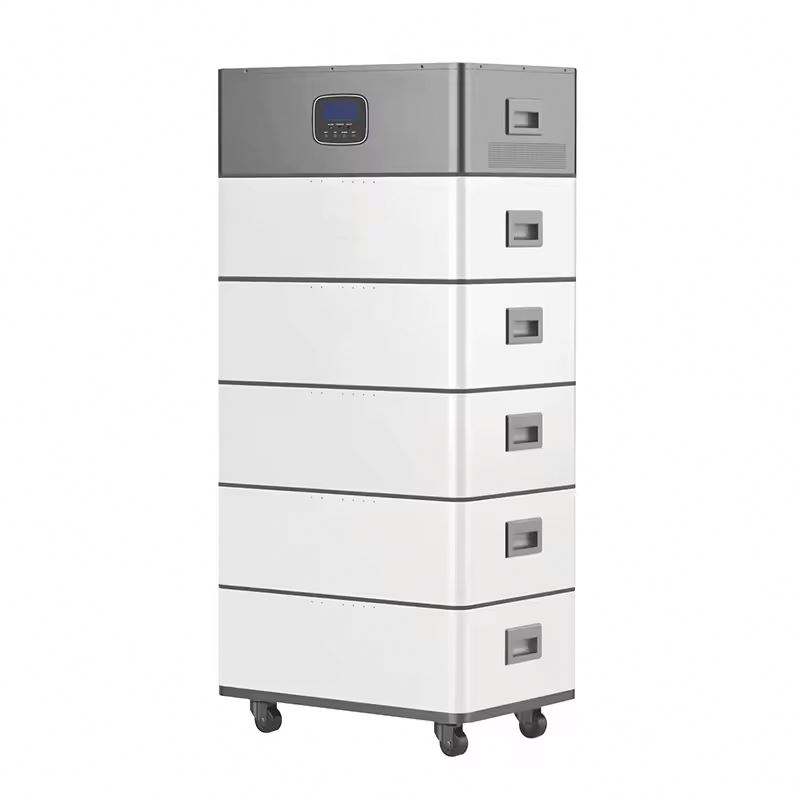
Storage changes the conversation. Daytime use, export limits, backup loads, peak power, usable energy, temperature, and expected cycling pull the design in different directions. Ask the solar battery supplier which inverter model and firmware were tested, how communication is wired, what protection is required, and how commissioning is recorded. A single word—“compatible”—does not answer those questions.
For an off grid solar system, the design begins with loads rather than panel count. Record which loads must run, their starting currents, hours of use, seasonal variation, and the acceptable loss-of-load risk. Then consider solar resource, autonomy, generator support, maintenance, and future expansion. Oversizing one component cannot repair a poorly understood load profile.
A commercial solar system on a factory roof has different constraints. Roof zones, fire access, shading, drainage, wind uplift, structural capacity, shutdown rules, and working hours can dominate the design. The selected module dimensions and clamp zones flow directly into the array layout and mounting calculation.
This is also why commercial solar system cost cannot be reduced to module price. Engineering, electrical protection, mounting, labor, access equipment, monitoring, permits, freight, commissioning, spares, and financing all matter. A slightly cheaper panel may create a more expensive roof layout or string design.
When a buyer wants one accountable solar equipment supplier, ask who owns the interface between components. A complete quotation should identify module, inverter, battery where used, mounting, protection, communication, drawings, commissioning scope, exclusions, and warranty routes. One invoice does not automatically mean one technical responsibility.
Review the warranty by walking through a fictional claim
Take a hypothetical serial number and imagine that its output is questioned three years after installation. Who receives the first email? What evidence is required? Must the buyer provide IV-curve data, thermal images, installation records, or a laboratory report? Who decides whether the unit is defective? What remedy is available, and who pays freight or labor?
This exercise quickly exposes missing steps. A warranty may promise repair, replacement, or a financial remedy while excluding removal, transport, reinstallation, or lost energy. The exclusion may be commercially normal, but the buyer needs to price the residual risk.
Confirm the warranty issuer's legal name and address. Check whether the terms apply in the destination country and whether they transfer to the project owner. For private-label business, decide whether the importer handles the customer-facing claim and how the factory supports it behind the scenes.
Set response expectations in the supply agreement. An acknowledgement time, evidence-review time, and escalation route are more useful than a vague promise of “good after-sales service.” Define how samples will be returned or examined when international freight is disproportionate. Agree on data retention so serial records still exist when the claim arrives.
Ask about product change or discontinuation. If the original size or electrical characteristics are no longer made, what replacement strategy will be used? A module that is physically incompatible with the remaining array can create extra work. Spares, compatible replacements, and reasonable notice should be considered for larger projects.
Use a pilot order to test the relationship
A sample is useful for dimensions, appearance, labels, connectors, and initial electrical checks. It does not test container packaging, production consistency, document flow, or delivery management. A pilot order adds those missing pieces without immediately exposing the full annual program.
Write acceptance criteria before the pilot begins. Approve the data sheet, drawing, component scope, artwork, pack, tests, serial file, documents, and delivery milestones. Decide who may accept a deviation. If a change is approved in a chat message but never reaches the production order, the pilot has not tested control.
During production, ask for a concise status report and resolve decisions quickly. At inspection, sample against the agreed plan rather than inventing new requirements on the loading day. After arrival, record package condition, unloading experience, sample measurements, paperwork quality, and the supplier's response to questions.
The commercial team should review the pilot alongside the quality team. Was the quotation complete? Were bank details consistent? Did documents arrive early enough for review? Were answers direct, or did every technical question require several rounds? Communication quality has a cost, especially when a project is moving quickly.
Scale only after open issues have owners and dates. A minor label error may be easy to correct. Unexplained material changes or missing traceability are different. The purpose of a pilot is to learn while the exposure remains manageable.
Notice the warning signs, then ask one more question
Not every gap is a reason to reject a supplier. A new salesperson may send the wrong attachment. A certificate database may use an older company address. A production plan may change after a material delay. How the supplier clears a gap can tell you more than the original mistake.
Stop and reconcile a model number that changes from one attachment to the next. Do the same when a factory address disappears or the bank beneficiary has no explained link to the seller. Screenshots are poor substitutes for verifiable certificates. And “plenty of capacity” still needs to become a production date for the named model.
Technical evasion is another signal. If a question about the junction box receives only a power-tolerance answer, ask it again in a closed form: “Please confirm the proposed junction-box maker and model, or state that the source is not fixed.” Closed questions are useful when marketing language begins to replace evidence.
Watch for document timing. The data sheet and warranty should be available before the purchase order, not after production. Artwork should be approved before printing. Packing details should be reviewed before booking. A supplier that postpones every document until the next milestone leaves the buyer with less leverage and less time.
Quotations can carry quiet warnings too. Look for an Incoterm without a named place, a delivery promise without a start date, a price without validity, or a warranty mentioned only in the product description. Ask whether inspection, pallet protection, OEM work, local transport, and export documents are included. Silence should not be interpreted as inclusion.
One uncomfortable answer is not automatically a red flag. A factory that says “we cannot meet that date,” “this model is outside the certificate,” or “that component requires a new test” may be protecting the project. Honest limits are easier to manage than automatic agreement.
Create an issue log during qualification. Give each question an owner, requested evidence, due date, and status. Close it only when the answer is documented or the purchasing team consciously accepts the risk. This keeps a long email chain from turning into accidental approval.
Send an RFQ that invites evidence, not slogans
A strong RFQ is easy to answer in sections. Ask the supplier to return a compliance matrix beside the quotation. “Comply,” “deviation,” and “not applicable” are useful only when a deviation includes an explanation and document reference.
Include these requests:
- Legal seller, manufacturing location, certificate holder, and warranty issuer.
- Exact model, data sheet revision, drawing, construction description, and approved alternatives.
- Certificate and report scope for the destination market.
- Production lead time, available window, forecast assumptions, and order cut-off.
- Inspection plan, serial-level data, traceability, and record-retention period.
- Packaging drawing, loading quantity, weights, photos, and unloading notes.
- Price breakdown, Incoterm, named place, currency, validity, payment, and exclusions.
- Warranty document, claim workflow, response times, remedy, and logistics responsibility.
- OEM artwork process and revision approval, if required.
- Technical contact and escalation contact after purchase.
Allow the supplier to ask questions. A manufacturer that notices a conflict between the requested cable length, packing quantity, certificate scope, and delivery date is doing useful work. The most dangerous quotation is sometimes the one that agrees with everything instantly.
A practical decision rule for procurement teams
When the quotations are complete, score evidence separately from promise. A clear document that covers the exact model earns more than a general statement. A demonstrated traceability lookup earns more than “full traceability.” A production schedule tied to materials and inspection earns more than “fast delivery.”
Keep technical compliance as a gate. A low commercial score can be negotiated; a product that does not meet the market or system requirement should not advance because its price is attractive. After the gate, compare quality control, delivery, warranty, communication, landed cost, and strategic fit.
Record the reasons for the selection. Procurement staff change, projects are delayed, and the next order may arrive six months later. A short decision memo preserves the approved model, factory, documents, open conditions, and commitments. It also makes repeat orders faster.
There is no universal “best” factory. There is a supplier whose controlled product, evidence, capacity, and commercial terms fit a particular buyer and project. That is a more demanding conclusion than choosing the lowest price-per-watt line. It is also far more useful when the container arrives.
Prepare the information that will produce a useful quotation
Before contacting THLink Power, gather the destination country, application, target system size, module quantity or annual forecast, preferred module range, site temperature, inverter information, battery or backup requirement, roof or land details, target delivery date, and Incoterm. Attach drawings and load data when available.
If some inputs are unknown, say so. A good technical discussion can separate fixed requirements from choices that still need engineering. The buyer is not being asked to finish every engineering task. It is supplying the boundaries that keep the proposal from becoming guesswork.
In the enquiry, request papers for the named model, a separated commercial offer, and the supplier's assumptions. Treat the reply as the first qualification file. More checking follows.